SH(ASCP) Exam Prep - Courses, Study Materials and Question Banks
The MLSIA SH(ASCP) Exam Prep equips you with focused hematology study tools, advanced review strategies, and expert guidance to help you approach the Specialist in Hematology (SH) exam with confidence. Strengthen your knowledge of hematologic disorders, laboratory techniques, and diagnostic principles through targeted practice, structured study plans, and reliable support.
SH(ASCP) Prep Courses, QBanks, and Study Materials
Prepare with confidence, sharpen your hematology expertise, and take the next step toward earning your SH(ASCP) certification.
$319.00Original price was: $319.00.$299.00Current price is: $299.00.
⭐Real Reviews & Testimonials⭐
Nataliia Suprun
Verified Buyer
5/5
Failing the MLS(ASCP) exam on my first try was heartbreaking and left me feeling really upset and discouraged. I felt like I was never going to pass this exam. Moreover, having a bachelor's degree from a foreign country made me feel like I didn't have the proper materials to study.
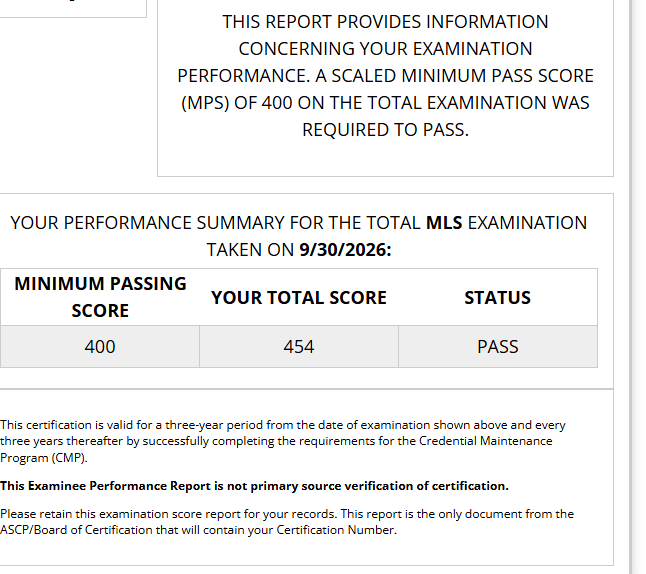
But everything changed when I found the MLSIA Live Online course that helped me to pass the MLS(ASCP) exam on September 30, 2026.
The weekly live Saturday classes kept me on track, and the lectures were complete. They also provided comprehensive study guides with all the lectures and study materials, which made reviewing key topics super convenient anytime.
The study plan and Q&A Banks were amazing for practice. They helped me get used to real test questions, build stamina, and fix my mistakes. Plus, being able to email the professor for quick answers gave me total peace of mind.
I went from feeling defeated to walking into test day calm and ready. This course gave me my confidence back, and I highly recommend it to anyone preparing for the exam!
My greatest appreciation to the professor and the whole team!
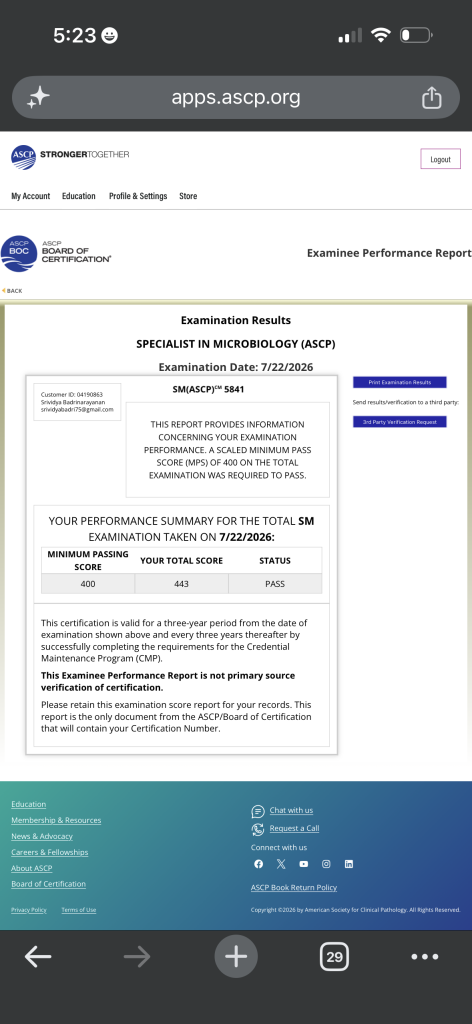
Highly recommend MLSIA Academy! I just passed my SM(ASCP) exam and couldn't have done it without this course. The high-yield study guides and realistic practice questions prepared me perfectly for the exam layout. The curriculum is concise, relevant, and worth every penny. Five stars!
MLS Academy is an excellent investment for anyone taking the SM(ASCP) exam. The depth of the microbiology content and management modules is fantastic. What sets this program apart is the quality of the resources and the responsiveness of the instructors. They truly care about student success. Thanks to their preparation tools, I felt confident going into the testing center and passed!
I enrolled in the MLSIA ASCP program to prepare for my certification exam. the lectures are organized and easy to follow and the study materials have helped me understand topics more clearly. I especially like having everything in one place. I am still preparing for my exam but so far the program has been very helpful.
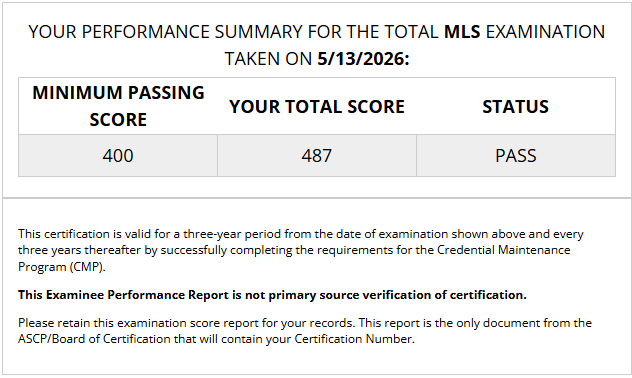
This course was the keystone to passing the MLS(ASCP) exam on 5/13/2026. I took the exam 3 times before taking the course. I found it to be a great help in bridging the gaps in the information. Its a hard exam with a lot of information. Before the MLSIA prep course i was using the Orange book and Labce but that wasn't enough. I felt i was just memorizing information rather than learning to understand. This prep course gave full lectures with all the information needed. The online quizzes are very nice.
highly recommend if you feel you lack a lot of the necessary knowledge.
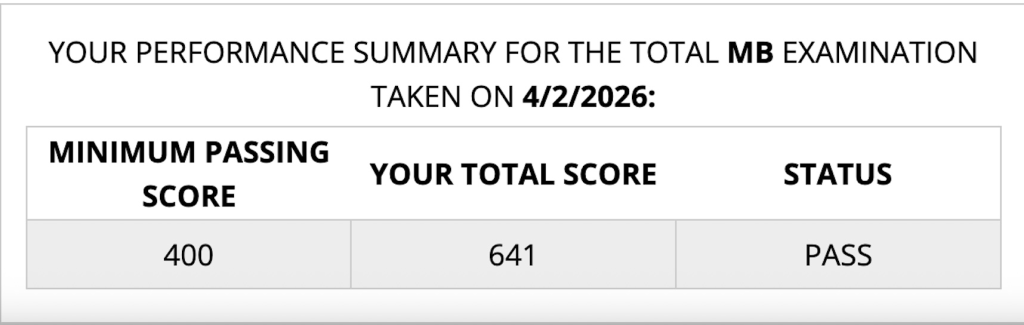
I passed exam with 641 score. The Q&A question bank for the preparation of MB-ASCP examination helped me greatly to solve many questions. However, the questions were not the same, but they helped me to select the topics and understand the content.
SH(ASCP) Exam Prep: Specialist in Hematology Certification Courses, Study Materials & Question Banks
SH(ASCP) Exam Prep is a comprehensive preparation framework designed for experienced laboratory professionals pursuing the American Society for Clinical Pathology Board of Certification (ASCP BOC) Specialist in Hematology credential. It develops the advanced hematology knowledge, diagnostic interpretation skills, and laboratory management competencies expected of professionals working at the specialist level.
Unlike preparation focused primarily on routine hematology testing, Specialist in Hematology preparation addresses broader responsibilities involving complex hematologic disorders, advanced coagulation testing, flow cytometry immunophenotyping, bone marrow evaluation, molecular and cytogenetic studies, and laboratory quality management.
The SH(ASCP) credential recognizes professionals with advanced knowledge, skills, and abilities in hematology. Specialists may contribute beyond routine testing by serving as technical leaders, educators, consultants, and advisors within clinical hematology laboratories.
Eligibility is determined by the ASCP Board of Certification through specific education, certification, clinical experience, research, and academic teaching pathways. Depending on the eligibility route, candidates may qualify through a combination of graduate or doctoral education, existing laboratory credentials, and documented professional experience.
Preparation must therefore address both advanced hematology subject matter and the broader responsibilities associated with specialist-level laboratory practice.
SH(ASCP) Exam Content Areas & Specialist in Hematology Preparation Focus
Every MLSIA SH(ASCP) exam preparation module is structured around the official ASCP Board of Certification examination content guidelines for the [current_date format='Y'] Specialist in Hematology examination.
The SH(ASCP) certification examination evaluates five major hematology domains: Hematology Physiology, Hematology Disease States, Hematology Laboratory Testing, Hemostasis, and Laboratory Operations.
Although the H(ASCP) and SH(ASCP) examinations share four major hematology content areas, the Specialist in Hematology examination includes an additional Laboratory Administration component within Laboratory Operations. This specialist-only domain expands the examination scope to include budgeting, purchasing, personnel management, facility operations, quality improvement, and laboratory leadership.
The official ASCP BOC examination content guideline assigns the following percentages:
Content Area
Description
Examination Percentage
Hematology Physiology
Production, destruction, and function of blood cells, body fluids, and bone marrow, including the physiological mechanisms underlying normal hematopoiesis
10–15%
Hematology Disease States
Qualitative and quantitative abnormalities involving erythrocytes, leukocytes, and platelets, including anemias, hemoglobinopathies, hematologic malignancies, and platelet disorders
20–25%
Hematology Laboratory Testing
Cell counts, blood and body fluid morphology, differentials, hemoglobin studies, hemolytic indicators, special stains, flow cytometry immunophenotyping, and molecular/cytogenetic testing
20–25%
Hemostasis
Coagulation and fibrinolytic pathways, vascular physiology, bleeding and thrombotic disorders, coagulation factor deficiencies, inhibitors, and specialized hemostasis testing
20–25%
Laboratory Operations
Quality assessment, troubleshooting, POCT, regulations, safety, laboratory mathematics, instrumentation, and laboratory administration, including financial, operational, personnel, and quality management responsibilities and lab administration
15–20%
What the SH(ASCP) Exam Requires of a Specialist in Hematology
The SH(ASCP) examination evaluates more than the ability to recognize abnormal blood cell morphology or identify common hematologic disorders. It assesses the advanced scientific understanding and professional judgment required to evaluate complex hematology findings, oversee specialized testing, and maintain reliable laboratory operations.
A Specialist in Hematology must understand the relationship between hematopoiesis, cellular morphology, disease classification, laboratory methodology, and clinical findings. The role also requires the ability to evaluate analytical performance, troubleshoot instrumentation, interpret quality control data, and support decisions involving specialized hematology and coagulation procedures.
The examination reflects these responsibilities through areas such as:
Advanced evaluation of erythrocyte, leukocyte, and platelet abnormalities
Peripheral blood smear and bone marrow morphology interpretation
Classification of acute and chronic leukemias, lymphomas, and myeloid neoplasms
Hemoglobinopathy investigation and interpretation of hemoglobin studies
Flow cytometry immunophenotyping and identification of abnormal cell populations
Molecular and cytogenetic testing, including recurrent hematologic abnormalities
Advanced coagulation studies, factor assays, inhibitors, and thrombophilia investigations
Interpretation of specialized platelet function and aggregation studies
Hematology instrumentation, method evaluation, and analytical troubleshooting
Quality management, regulatory compliance, and laboratory administration
Personnel supervision, competency assessment, budgeting, and continuous quality improvement
Because the SH(ASCP) examination uses Computer Adaptive Testing (CAT), candidates must demonstrate consistent knowledge and analytical reasoning across different levels of question difficulty. Preparation should emphasize the interpretation of laboratory findings, understanding of complex disease mechanisms, and application of specialist-level judgment rather than memorization alone.
How ASCP Evaluates Specialist-Level Hematology Competence
The ASCP Board of Certification evaluates SH(ASCP) candidates through theoretical and procedural questions that measure both scientific understanding and the ability to apply knowledge in laboratory situations.
The examination assesses whether candidates can:
Correlate hematologic abnormalities with underlying physiological and pathological mechanisms
Distinguish between different hematologic malignancies using morphology, immunophenotyping, and relevant laboratory findings
Evaluate advanced hematology and hemostasis testing procedures
Interpret molecular and cytogenetic findings associated with hematologic disorders
Recognize analytical limitations and select appropriate troubleshooting procedures
Evaluate coagulation abnormalities and determine the significance of specialized test results
Apply laboratory quality assurance principles and regulatory requirements
Understand laboratory administration, personnel management, and financial operations
These competencies reflect the broader responsibilities of a hematology specialist, where technical expertise must be combined with quality oversight, professional leadership, and reliable interpretation of complex laboratory findings.
The SH(ASCP) examination consists of 100 multiple-choice questions administered within a 2-hour and 30-minute testing period using Computer Adaptive Testing. Questions may assess both theoretical knowledge and procedural understanding, including calculations, laboratory techniques, and quality assurance protocols.
What's Included in SH(ASCP) Exam Prep
Effective Specialist in Hematology preparation requires an organized combination of advanced content review, instructor guidance, targeted question practice, and comprehensive examination simulations.
MLSIAcademy provides multiple preparation formats designed to help candidates progress from understanding complex hematology concepts to applying their knowledge under examination conditions.
SH(ASCP) Live Course
The SH(ASCP) Live Course provides instructor-led preparation covering the major hematology and hemostasis examination domains.
Instruction focuses on understanding complex hematologic disorders, recognizing diagnostic patterns, interpreting laboratory findings, and applying specialist-level reasoning to examination questions.
The interactive learning environment allows candidates to explore challenging subjects, clarify difficult concepts, and strengthen their understanding through guided discussions and instructor explanations.
Particular attention is given to areas requiring deeper analytical understanding, including hematologic malignancies, peripheral blood and bone marrow morphology, flow cytometry, specialized coagulation testing, and laboratory quality management.
SH(ASCP) Self-Paced Course
The SH(ASCP) Self-Paced Course provides a flexible preparation pathway for experienced hematology professionals balancing examination preparation with laboratory responsibilities.
The course organizes hematology topics into structured learning segments, allowing candidates to review difficult subjects, reinforce important disease associations, and progress through the examination content systematically.
Recorded instruction and organized study resources support repeated exposure to challenging concepts, particularly in hematologic malignancies, immunophenotyping, coagulation, and specialized laboratory testing.
Rather than requiring candidates to navigate extensive and disconnected reference materials, the resources emphasize essential hematology concepts, laboratory findings, diagnostic relationships, and examination-relevant knowledge.
Important preparation subjects include:
Erythrocyte physiology, anemia classification, and hemoglobinopathies
Leukocyte abnormalities and hematologic malignancy classification
Myeloid and lymphoid neoplasms
Peripheral blood and bone marrow morphology
Platelet disorders and abnormalities of platelet function
Flow cytometry immunophenotyping and lymphocyte subsets
Molecular and cytogenetic abnormalities in hematologic disease
Coagulation pathways, factor deficiencies, and acquired inhibitors
Thrombophilia investigations and specialized hemostasis assays
Laboratory quality systems, instrumentation, and administrative principles
This focused format supports efficient revision while helping candidates connect individual laboratory findings with broader hematologic mechanisms and diagnostic interpretations.
SH(ASCP) Video Lessons
The SH(ASCP) Video Lessons provide visual explanations of complex hematology topics and their laboratory applications.
Video instruction helps candidates understand challenging mechanisms, recognize important diagnostic patterns, and connect theoretical knowledge with practical laboratory interpretation.
These lessons are particularly useful when reviewing subjects such as leukemia classification, abnormal cell morphology, flow cytometry, coagulation pathways, and specialized hematology procedures.
The ability to revisit lessons allows candidates to reinforce difficult concepts and strengthen retention throughout their preparation.
SH(ASCP) Assessment Tools for Advanced Hematology Preparation
SH(ASCP) Q&A Question Bank
The SH(ASCP) Q&A QBank provides targeted examination-style questions designed to reinforce hematology knowledge and evaluate the ability to apply scientific principles to laboratory scenarios.
Questions address important hematology domains, including disease classification, blood cell morphology, specialized testing, coagulation, and laboratory operations.
Explanations help candidates understand the scientific reasoning behind correct answers, recognize misconceptions, and identify areas requiring additional review.
SH(ASCP) Quiz Question Bank
The SH(ASCP) Quiz QBank provides shorter assessments for evaluating knowledge across individual hematology subjects.
Focused quizzes allow candidates to reinforce recently studied material and assess their understanding of specific areas such as hematologic malignancies, hemoglobinopathies, platelet abnormalities, flow cytometry, and coagulation testing.
Regular knowledge checks encourage consistent revision and help identify weaknesses before progressing to broader examination simulations.
SH(ASCP) Practice Exams
The SH(ASCP) Practice Exams QBank provides comprehensive examination-style practice across the major Specialist in Hematology content areas.
Practice questions expose candidates to different types of hematology problems, including laboratory calculations, morphology interpretation, disease correlation, coagulation abnormalities, and analytical troubleshooting.
These assessments help develop concentration, improve response accuracy, and evaluate performance across multiple examination domains.
SH(ASCP) Mock Exams
The SH(ASCP) Mock Exams QBank provides comprehensive examination simulations designed to evaluate overall preparation before the actual ASCP certification examination.
Mock examinations allow candidates to practice sustained analytical reasoning, manage testing time, and become familiar with the experience of answering questions across different hematology subjects.
Performance review helps identify remaining knowledge gaps and determine which areas require additional attention during the final preparation period.
SH(ASCP) How to Pass Exam Action Plan
The SH(ASCP) How to Pass Exam Action Plan provides structured guidance for organizing preparation, using study resources effectively, and progressing toward examination readiness.
It helps candidates establish a consistent study routine, balance content review with question practice, and identify the appropriate stages for moving from learning to assessment and final revision.
This strategic component is particularly valuable for experienced laboratory professionals balancing specialist certification preparation with demanding professional schedules.
Advanced Hematology Topics in the SH(ASCP) Examination
The Specialist in Hematology examination covers several interconnected disciplines that require candidates to understand both the underlying disease mechanisms and the laboratory methods used to investigate them.
Hematologic Malignancies and Disease Classification
Candidates must understand the classification and laboratory characteristics of myeloid and lymphoid neoplasms, including acute leukemias, chronic leukemias, myelodysplastic syndromes, myeloproliferative neoplasms, lymphomas, and plasma cell disorders.
Preparation involves correlating peripheral blood findings, bone marrow morphology, immunophenotypic characteristics, and relevant molecular or cytogenetic abnormalities.
Flow Cytometry and Immunophenotyping
Flow cytometry is an important component of advanced hematology laboratory testing. Candidates should understand immunophenotypic markers, lineage identification, lymphocyte subset analysis, and the recognition of abnormal cell populations associated with leukemia and lymphoma.
Additional topics include paroxysmal nocturnal hemoglobinuria (PNH) testing and the interpretation of specialized immunophenotyping patterns.
Molecular and Cytogenetic Hematology
Molecular and cytogenetic testing contributes to the investigation and classification of hematologic disorders.
Relevant examination concepts include recurrent chromosomal abnormalities, BCR::ABL1, JAK2 mutations, and the relationship between genetic findings and hematologic disease states.
Candidates should understand the purpose and interpretation of these investigations within the broader diagnostic process.
Hemostasis and Advanced Coagulation
The hemostasis domain includes coagulation physiology, fibrinolysis, vascular function, bleeding disorders, thrombosis, and specialized coagulation testing.
Preparation should address mixing studies, factor assays, inhibitor investigations, von Willebrand disease testing, platelet aggregation, lupus anticoagulant testing, thrombophilia assessment, anti-Xa measurements, and thromboelastography.
Understanding the relationship between screening tests, specialized assays, and underlying coagulation abnormalities is essential for interpreting complex hemostasis findings.
Laboratory Operations and Administration
Unlike the shared hematology content areas, Laboratory Operations on the SH(ASCP) examination specifically includes laboratory administration.
Candidates must understand quality assessment, troubleshooting, regulatory compliance, laboratory mathematics, instrumentation, and safety while also developing knowledge of:
Laboratory budgeting and financial management
Capital equipment acquisition and cost analysis
Purchasing, inventory, and resource allocation
Facility management and laboratory information technology
Test verification and validation
Staffing, productivity, and personnel management
Training and competency assessment
Continuous quality improvement (CQI)
Individualized Quality Control Plans (IQCP)
Risk management and medical-legal responsibilities
These subjects reflect the additional operational and leadership responsibilities associated with the Specialist in Hematology credential.
Who Should Use SH(ASCP) Exam Prep Resources?
SH(ASCP) preparation is intended for experienced laboratory professionals who meet the ASCP Board of Certification eligibility requirements and want to demonstrate advanced competence in hematology.
Experienced Hematology Professionals: Laboratory scientists and specialists seeking formal recognition of advanced hematology knowledge and professional capabilities.
MLS(ASCP) Certified Professionals: Medical Laboratory Scientists with the required hematology experience pursuing advancement into specialist-level practice.
H(ASCP) Certified Professionals: Scientists in Hematology who meet an applicable SH eligibility route and intend to advance to the Specialist in Hematology credential.
Laboratory Supervisors and Technical Leaders: Professionals seeking to strengthen their understanding of advanced hematology, quality management, laboratory administration, and personnel responsibilities.
International Laboratory Professionals: Eligible candidates with appropriate academic qualifications and documented experience seeking ASCP Specialist in Hematology certification.
Repeat Test-Takers: Candidates who need more structured content review, targeted assessments, and stronger analytical reasoning across challenging examination domains.
Because SH(ASCP) eligibility requirements differ among application routes, candidates should review the official ASCP BOC requirements before applying.
ASCP and the Specialist in Hematology (SH) Credential
The Specialist in Hematology credential is issued by the American Society for Clinical Pathology Board of Certification (ASCP BOC), the professional certifying organization responsible for evaluating laboratory personnel through established education, experience, and examination standards.
According to the ASCP BOC, Specialists in Hematology perform analyses on blood and body fluids to identify hematologic and coagulation disorders and support the diagnosis and treatment of disease. They possess advanced knowledge, skills, and abilities and may serve as leaders, educators, and advisors within their specialty.
The SH(ASCP) credential reflects professional capabilities that extend across advanced diagnostic testing, analytical evaluation, and laboratory management, including:
Advanced interpretation of hematologic and coagulation abnormalities
Evaluation of peripheral blood, bone marrow, and body fluid findings
Application of flow cytometry and specialized hematology testing
Understanding of molecular and cytogenetic diagnostic methods
Evaluation of laboratory methodologies and analytical performance
Quality assurance, regulatory compliance, and continuous improvement
Laboratory administration, personnel supervision, and resource management
Technical consultation, education, and professional leadership
The SH(ASCP) certification examination provides a formal assessment of these specialist-level competencies through a combination of theoretical and procedural questions.
Preparing for this credential requires more than reviewing routine hematology procedures. Candidates must develop an integrated understanding of hematologic disease, specialized diagnostic methods, hemostasis, and the operational responsibilities of an advanced clinical laboratory professional.
With structured courses, focused study materials, video instruction, expert guidance, and examination-style question banks, MLSIAcademy provides an organized preparation framework for experienced laboratory professionals pursuing the Specialist in Hematology (SH(ASCP)) credential and advancing their careers in clinical laboratory science.
SH(ASCP) Exam Preparation FAQs
SH(ASCP) stands for Specialist in Hematology, a professional certification awarded by the ASCP Board of Certification. It recognizes advanced knowledge and competency in hematology, including complex diagnostic investigations, specialized laboratory testing, hemostasis, and laboratory management.
H(ASCP) is the Scientist in Hematology credential, while SH(ASCP) is the Specialist in Hematology credential. SH(ASCP) evaluates advanced specialist-level knowledge and includes additional emphasis on laboratory administration, leadership, and management responsibilities.
The SH(ASCP) credential is intended for qualified laboratory professionals with relevant hematology education and experience who want to demonstrate advanced expertise in the specialty. It may be particularly relevant to experienced hematology scientists, technical specialists, laboratory supervisors, and professionals involved in specialized diagnostic testing.
It recognizes advanced competency in hematologic physiology, disease classification, laboratory investigation, hemostasis, and laboratory operations. The credential also reflects the ability to evaluate complex findings and contribute to technical consultation, education, quality management, and laboratory leadership.
The ASCP Board of Certification establishes specific eligibility routes based on education, professional certification, and documented experience, among other applicable requirements. Requirements vary by route, so candidates should review the current official ASCP BOC SH eligibility guidelines before submitting an application.
The SH(ASCP) examination evaluates five major content areas:
• Hematology Physiology
• Hematology Disease States
• Hematology Laboratory Testing
• Hemostasis
• Laboratory Operations
Candidates should prepare across all five domains, including the laboratory administration responsibilities associated with specialist-level practice.
Hematology Physiology addresses the production, maturation, function, and destruction of blood cells. Important concepts include hematopoiesis, erythropoiesis, leukocyte development, platelet physiology, bone marrow function, and the physiological characteristics of blood and body fluids.
This area covers disorders affecting erythrocytes, leukocytes, and platelets. Preparation should include anemia classification, hemoglobinopathies, hemolytic disorders, myelodysplastic syndromes, myeloproliferative neoplasms, acute and chronic leukemias, lymphomas, and other hematologic malignancies.
Morphology is an important component of advanced hematology. Candidates should be able to evaluate peripheral blood and bone marrow findings, recognize abnormal cellular features, distinguish relevant disease patterns, and correlate morphology with clinical and laboratory information.
Yes. Candidates should understand flow cytometry principles, immunophenotyping, lineage identification, lymphocyte subsets, and the interpretation of abnormal cell populations. Knowledge of marker patterns used in the investigation of leukemia and lymphoma is particularly relevant.
Yes. Candidates should understand how molecular and cytogenetic findings contribute to the investigation and classification of hematologic disorders. Relevant concepts include recurrent chromosomal abnormalities, molecular markers, and the interpretation of findings such as BCR::ABL1 and JAK2 mutations.
Hemostasis includes vascular physiology, coagulation, and fibrinolysis. Candidates should review bleeding and thrombotic disorders, coagulation factor deficiencies, acquired inhibitors, von Willebrand disease, platelet function disorders, specialized coagulation assays, and the interpretation of complex hemostasis results.
In addition to routine laboratory quality, safety, instrumentation, troubleshooting, and regulatory topics, SH(ASCP) includes laboratory administration. This involves personnel management, budgeting, purchasing, inventory, resource allocation, facility operations, quality improvement, and supervisory responsibilities.
Start by reviewing the examination content guidelines and assessing your strengths and weaknesses across the five domains. Divide your preparation into manageable study periods, prioritize challenging subjects, and combine content review with question practice and regular progress assessments.
Candidates should pay particular attention to complex hematologic disease classification, peripheral blood and bone marrow morphology, immunophenotyping, molecular and cytogenetic findings, specialized coagulation testing, and laboratory administration. The amount of study time devoted to each topic should reflect both examination emphasis and individual knowledge gaps.
Practice connecting different types of laboratory evidence rather than studying each result independently. For example, combine peripheral blood morphology, CBC findings, bone marrow characteristics, immunophenotypic markers, and molecular results when evaluating hematologic disorders. This approach strengthens diagnostic reasoning and helps develop a more.